

On this page
AI & Authorship
A transparent approach to authorship, credibility, and responsible AI use.
Our Commitments
Human authorship non-negotiable
Every theological insight, core argument, and spiritual formation directive originates from verified human authors. AI does not originate ideas, theology, or perspectives on behalf of a movement leader.
Tool for translation
We are not using AI to create content from scratch — we are using it to bring a leader’s existing body of work into forms that actually function online, bridging linguistic and format gaps without diluting the truth.
Transparency builds trust
Whenever AI assists in the structural or visual synthesis of our work, we disclose its involvement. In a world of “AI slop,” our goal is not more content — it’s more trustworthy, grounded, and traceable content.
How We Actually Use AI
In the context of digital publishing, AI is an exoskeleton. It does not replace the heart, but it extends the reach and speed of the body’s movements.
We are not casually using AI. Following a year and a half of ongoing conversation about the impact of AI on the world and on writers like Alan Hirsch, Movemental is committed to the ongoing refinement of a disciplined editorial system that insists that AI is never the author or the artist, and must always be put towards transparent and ethical ends with lasting human value.
Organize & Structure
We start with a leader’s existing corpus and map complex long-form work into digestible formats and navigation trees.
Adapt
Converting high-level theological research into accessible courses, articles, small-group guides, and pathways.
Voice Consistency
Checking new content against the historical archive to ensure continuity in tone, terminology, and conviction.
Clarity
Automated copy-editing for readability standards while preserving the specific nuance of the author’s intent.
Our current process involves:
- We start with a leader’s existing corpus (books, teachings, frameworks)
- We establish what their voice, tone, and convictions actually are
- We use AI to assist in:
- •organizing that material
- •adapting it into new formats (courses, articles, pathways)
- •checking alignment with their established voice
We are exploring ways to:
- Score credibility of content against the original corpus
- Ensure new content does not drift from what has actually been said
In other words:
AI is not generating content — it is helping us faithfully translate and safeguard what already exists.
This is actually the opposite of AI slop.
The Boundaries of Intent
Red Zone: Authorship (Prohibited)
AI may not initiate original thought.
- “Write an article in Alan’s voice on [topic]”
- Generating theological positions the leader hasn’t expressed
- Publishing AI-generated writing as if it were human-authored
- Bulk SEO content generation
- Using AI to extend a leader’s thinking into new areas
- Any use of AI that obscures who is responsible for the ideas
Yellow Zone: Visuals (Discernment)
Abstract synthesis and layout assistance.
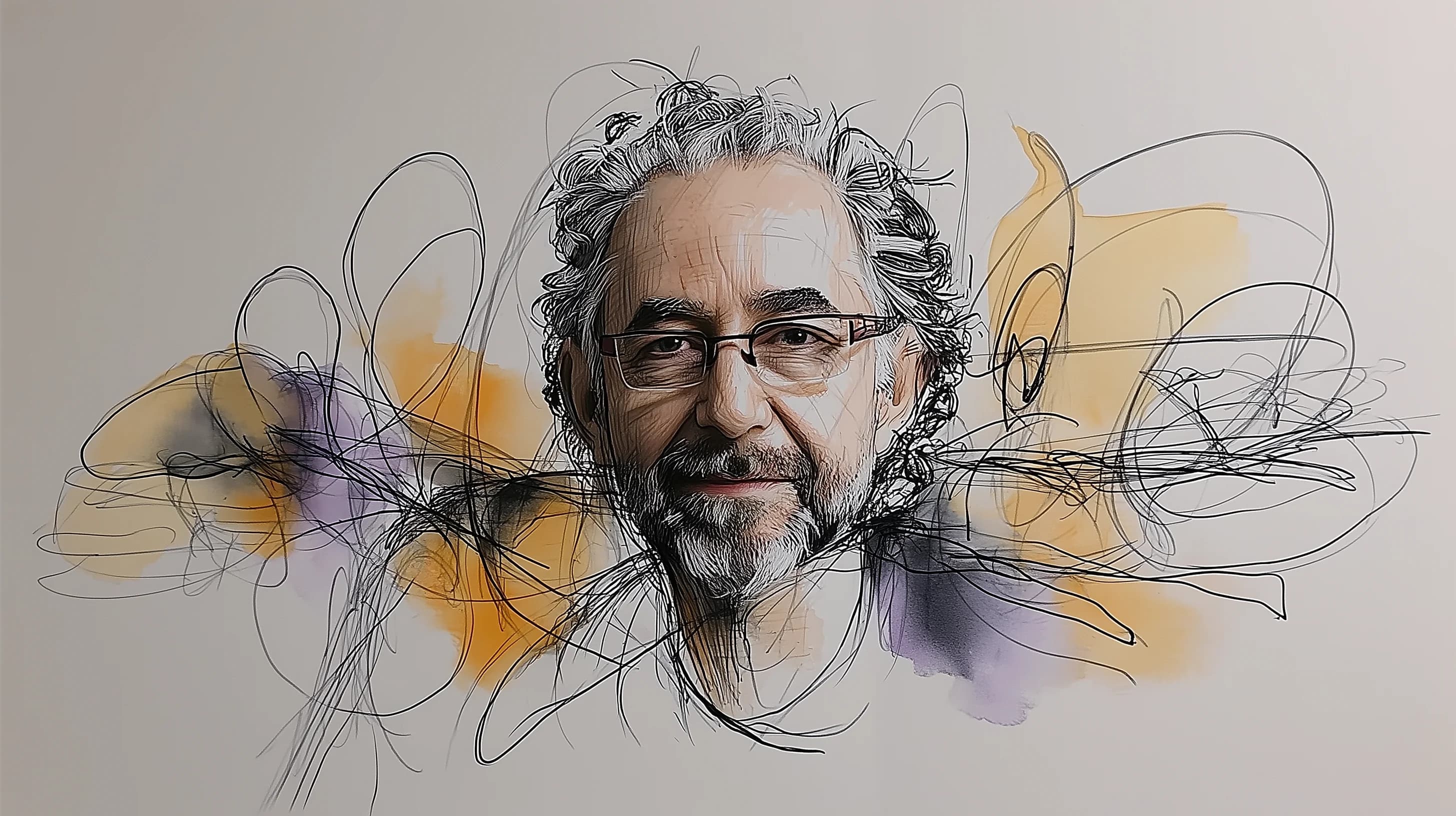
Used for generating metaphorical visual assets and UI layouts where photography is not available. Each use is individually vetted for aesthetic alignment.
Allowed (with care)
- Abstract backgrounds
- Diagrams and conceptual visuals
- AI-assisted UI and layout
Not allowed
- Prompting "in the style of" a living artist
- Passing AI visuals off as human-created artwork
- Replacing artists where authorship is central
Green Zone: Production (Permitted)
Efficiency in transmission and distribution.
- Turn books into courses and learning experiences
- Adapt long-form work into accessible formats (articles, guides, FAQs)
- Organize large bodies of work into pathways and frameworks
- Direct translation and cross-lingual adaptation
- Indexing, tagging, and archiving authored work
- Evaluate whether new writing aligns with the leader’s established voice
The AI Lab at Movemental
Our laboratory doesn’t ask “how can AI write for us,” but rather “how can AI help people read us?” AI Lab is a different category altogether. It’s not content or production — it’s a live conversational interface, which introduces new risks.
Every AI response in our ecosystem is required to cite its source from within the Movemental library.
First, we need to be clear:
AI Lab is not Alan. It is an interface into Alan’s body of work.
What we’re already doing / need to reinforce:
- Responses are grounded in Alan’s published work
- The system avoids speculation beyond what he has actually said
- Language framing:“Based on Alan’s work…”
not “Alan says…” - Guardrails to refuse speculative or inappropriate questions and redirect when something hasn’t been addressed directly
What we should add:
- Treat AI Lab as experimental
- Release to a smaller test group first (with adversarial questions)
- Maintain the ability to review conversations
- Keep AI Lab optional per leader
Common Concerns
On "AI slop"
We agree — it’s a real problem.
Movemental exists, in part, as a response to that problem.
We are not increasing content volume — we are increasing content integrity.
On authorship and citation
We can strengthen this by:
- Citing sources where appropriate
- Grounding pathways in specific works
- Ensuring the leader is always the final editor
On artistic integrity
We take this seriously by:
- Allowing creators to opt out of AI visuals
- Avoiding stylistic imitation
- Being transparent about how visuals are created
On misuse of AI
We acknowledge:
- No system is perfect
- Misuse is possible
So we design AI Lab to be: non-authoritative, bounded, and clearly contextualized.
Depth Over Volume
“The real answer to AI risk is not better tools — it’s trusted communities with shared commitments. We prioritize formation over information, and substance over speed.”
Movemental is not just a platform. It’s a network of people saying:
authorship matters
credibility matters
and AI must be used in service of those things, not instead of them
Next in this guide
The AI & writing spectrum
How decisions shift across research, drafting, editing, and publishing — and how we think about each stage.
ContinueMovemental’s take on the AI & writing spectrum.
AI use in writing is not a single decision. It is a series of decisions — about research, drafting, editing, voice, adaptation, and publishing — each with its own ethical weight.
You’re seeing this because we believe AI use should be transparent.
Quick orientation
The simple spectrum
Most conversations about AI and writing start here: a single line from “no AI” to “all AI.” This is useful as a starting point, but it is incomplete.
This spectrum treats AI as one binary dial. In reality, the ethical question isn’t “how much AI?” — it’s “where in the process, and for what purpose?”
The rest of this page explores what that actually looks like.
The real question
Why one spectrum is not enough
Research, outlining, drafting, editing, translation, adaptation, and publishing are different acts. Each one carries a different ethical weight and a different relationship to authorship.
A single spectrum flattens all of this into one dial. The more honest approach is to examine each stage on its own terms.
Research
Is it verifiable and grounded?
Structuring
Is meaning preserved?
Drafting
Who is authoring ideas?
Editing
Is clarity improved or voice replaced?
Voice alignment
Is this faithful or synthetic mimicry?
Translation
Is this faithful or interpretive?
Adaptation
Is this transformation or distortion?
Each of these stages can be human-only, AI-assisted, or AI-driven. The ethical question depends on which stage you’re in and what kind of work you’re doing.
The process model
The writing process as a series of decisions
Different projects land in different places at different stages. A piece of content can be human-authored in its ideas, AI-assisted in research and editing, and human-approved at the end.
This is not a loophole — it is how thoughtful production actually works.
Below is a typical profile for content on this platform. Each project may differ.
Corpus search, source verification, cross-referencing
AI-AssistedOrganizing arguments, creating outlines, mapping themes
AI-AssistedWriting original sentences and forming arguments
HumanClarity, grammar, flow, readability improvements
AI-AssistedChecking tone and style against the author's established body of work
AI-AssistedTurning a book chapter into a course lesson or study guide
AI-AssistedReview, sign-off, and publishing decision
HumanOur posture
Red, yellow, green
Not every use of AI carries the same weight. Movemental uses a three-part framework to guide where AI belongs and where it doesn’t.
Red — authorship
Strict boundary
- AI generating original articles in a leader's voice
- AI inventing theological claims or extending a leader's position beyond their published corpus
- Publishing AI-generated writing as if it were directly authored by the leader
- Bulk SEO content farming
Yellow — discernment zones
Proceed with care
These areas require editorial judgment and human oversight. They are not off-limits, but they demand attention.
- Interpretive adaptation of complex arguments
- Sensitive stylistic revision where tone matters
- Substantial restructuring that may change emphasis
- Multilingual or cross-cultural adaptation where nuance is at stake
Green — production & editorial assistance
Where AI belongs
- Organizing a corpus of existing work
- Summarizing existing writing for different audiences
- Adapting books into courses, FAQs, learning pathways, study guides
- Translation into other languages
- Editing for clarity, grammar, and readability
- Voice alignment checks against established writing
- Research assistance with verification
In practice
How Movemental actually uses AI
This is not abstract. These are the actual practices behind the content on this platform.
Start from existing work
Everything begins with a leader's published corpus — books, teachings, frameworks, recorded lectures. We do not generate ideas. We translate what already exists.
Ground outputs in the corpus
AI outputs are checked against the leader's actual writing. If something cannot be traced back to established work, it does not ship.
Structure, adapt, translate, improve access
AI helps us turn long-form books into courses, learning pathways, and study guides. It helps with translation, formatting, and making dense material more approachable — without replacing the voice behind it.
Credibility scoring and alignment checking
We are building systems that score new content against a leader's pre-AI voice and prior work. The goal is measurable fidelity, not subjective impression.
Reduce slop, not produce more
AI is used to raise quality — catching errors, improving clarity, ensuring consistency. It is an editorial and research assistant, not a substitute author.
Movemental treats human authorship as sacred, while using AI as a transparent production and editorial tool to faithfully translate, strengthen, and scale existing work.
Trust
What transparency should look like
Readers should be able to understand how AI was used in what they’re reading. Not buried in legal fine print, but plainly stated alongside the content itself.
We think content provenance should look something like this:
Content provenance
Example disclosure for an article on this platform
This is a trust feature, not legal filler. It tells you where the human was and where the machine helped. We think every platform producing AI-adjacent content should offer something like it.
The goal is not maximal automation. It never was.
The goal is trustworthy, faithful, high-integrity digital translation of a leader’s real work — so that what they actually said and meant reaches the people who need it, in forms they can use.
AI is one part of how that happens. Authorship, conviction, and accountability remain human.
The measure is fidelity, not efficiency.